

Winter brings cold temperatures, chilly nights, and higher energy usage. For homeowners, this often means increased heating bills. But the good news is that you can prepare your home early and keep your energy costs under control. Winterizing your home does not have to be complicated; simple HVAC tips can make a big difference.
At Carolina Cool Heating & Air, we work with homeowners across North Carolina to keep their heating systems running smoothly and efficiently. In this guide, you’ll learn how to winterize your home, protect your HVAC system, and lower your heating bills without compromising comfort.
Why Winterizing Your Home Matters
When cold weather hits, your heating system works harder than in any other season. If your home is not prepared for winter, your HVAC system will use more energy, run longer, and break down faster. Winterizing helps you:
- Reduce heating costs
- Improve indoor comfort
- Prevent HVAC repairs
- Extend the life of your heating system
- Maintain steady temperatures in every room
This is especially important for homeowners in North Carolina, where winter temperatures can drop quickly and unexpectedly.
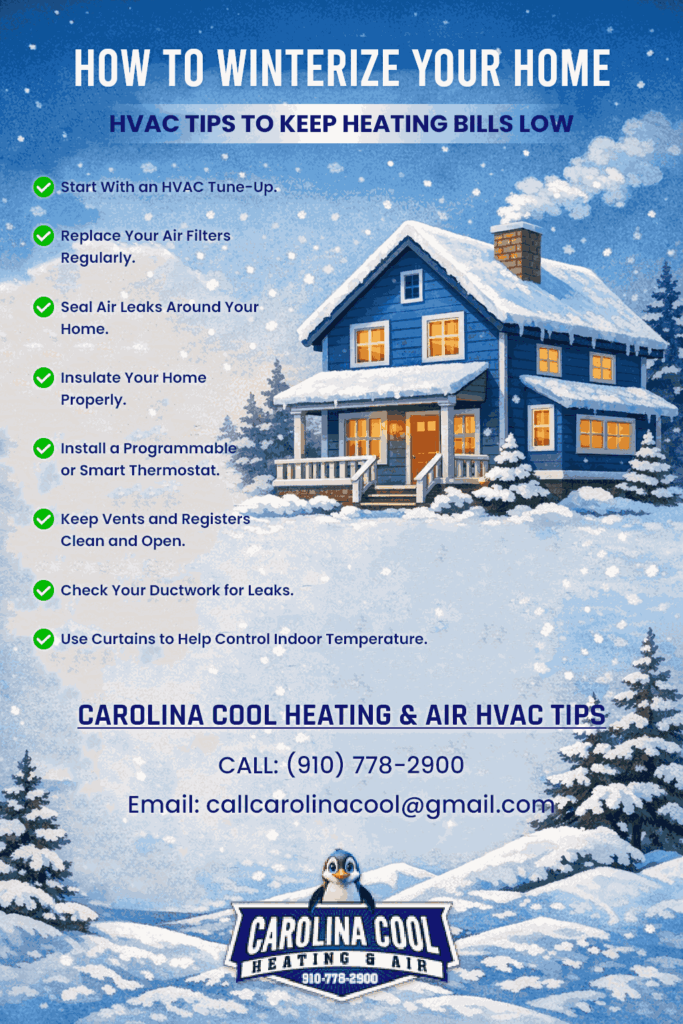
1. Start With an HVAC Tune-Up
Before winter arrives, schedule a professional HVAC tune-up. A seasonal tune-up is the easiest way to ensure your heating system is ready for heavy use.
During a tune-up, a technician will:
- Inspect and clean the furnace
- Check electrical connections
- Test the thermostat
- Lubricate moving parts
- Look for worn-out components
- Safe and smooth heating
A tuned system runs more efficiently, which directly lowers your heating bills. At Carolina Cool Heating & Air, we recommend one tune-up in the fall and another in the spring to keep your system in great shape all year long.
2. Replace Your Air Filters Regularly
A dirty air filter is one of the most common reasons heating systems use more energy. When filters get clogged, your HVAC system must work harder to push air through. This increases energy usage and puts stress on your furnace.
To prevent this:
- Check your filter every 30 days
- Replace it at least every 60–90 days
- Use high-quality filters for better airflow
Clean filters help your home warm up faster and keep your indoor air cleaner. This simple step can significantly lower your heating bills.
3. Seal Air Leaks Around Your Home
Air leaks allow warm air to escape and cold air to enter your home. This can make your heating system run longer and increase your monthly energy costs.
Common places where leaks occur include:
- Windows
- Doors
- Attic openings
- Electrical outlets
- Baseboards
Here’s what you can do:
- Use weatherstripping around doors
- Add caulk around window frames
- Install door sweeps at the bottom of exterior doors
- Seal small gaps with expandable foam
These fixes are affordable and can make a noticeable difference in how warm your home stays during winter.
4. Insulate Your Home Properly
Proper insulation helps trap warm air inside and keeps your home comfortable throughout the colder months. Many older homes in North Carolina lack sufficient insulation, especially in the attic.
Areas that need insulation include:
- Attic
- Crawl space
- Basement
- Walls
- Garage ceilings
If your home is under-insulated, your HVAC system will work harder than necessary. Upgrading insulation is an investment that pays for itself through reduced heating and cooling bills.
5. Install a Programmable or Smart Thermostat
A programmable thermostat can help you automate your home’s heating schedule, reducing energy waste. Smart thermostats go a step further by learning your habits and adjusting temperatures automatically.
Benefits include:
- Lower heating bills
- Precise temperature control
- Better comfort
- Remote access through your phone
Set your thermostat to a lower temperature when you’re asleep or away from home. Even lowering it by 1 degree can reduce your heating costs.
6. Keep Vents and Registers Clean and Open
Closed or blocked vents can force your HVAC system to work harder. Make sure air can flow freely through your home during winter.
Do this by:
- Opening all supply vents
- Removing dust from vents and registers
- Moving furniture away from airflow paths
Many homeowners try closing vents in rooms they don’t use, but this can actually increase pressure in the ductwork and damage your heating system. For better efficiency, keep all vents open.
7. Check Your Ductwork for Leaks
Leaky ducts can waste up to 30% of the warm air your furnace produces. If your ducts are in poor condition, your home will feel colder even if your thermostat is set high.
Common signs of duct problems include:
- Uneven heating
- Higher energy bills
- Dust buildup
- Weak airflow
A professional duct inspection from Carolina Cool Heating & Air can help identify leaks and improve your system’s efficiency. Sealing ductwork is one of the best ways to reduce heating costs in the long run.
8. Use Curtains to Help Control Indoor Temperature
Your windows play a big role in how much heat stays inside your home. Here are two simple tricks:
- Open curtains during the day to let sunlight warm your home naturally
- Close curtains at night to keep heat from escaping
This reduces the workload on your HVAC system and helps maintain a consistent temperature.
Why Choose Carolina Cool Heating & Air?
Choosing the right HVAC company matters, especially during winter. Here’s why homeowners in North Carolina trust Carolina Cool Heating & Air:
- Experienced and trained technicians
- Fast and reliable service
- Honest pricing with no hidden fees
- Local experts who understand North Carolina’s weather
- Quality maintenance plans to keep your system efficient
- Friendly customer service focused on your comfort
Final Thoughts
Winterizing your home is one of the most effective ways to lower your heating bills and stay comfortable during cold weather. Small steps like replacing air filters, sealing leaks, insulating your home, and scheduling HVAC maintenance can lead to big energy savings.
Homeowners across North Carolina trust Carolina Cool Heating & Air to keep their heating systems in top shape. Whether you need a tune-up, repair, or full inspection, our team is ready to help you stay warm all winter long.