

That shift isn’t just small talk about the weather. It’s changing how homes in Fayetteville and across North Carolina stay comfortable. Heating and cooling systems are working in new ways, often under more pressure than before. And for many homeowners, that means rethinking how they approach maintenance, repairs, and even full system upgrades.
Let’s walk through what’s really happening and what it means for your HVAC system.
The Changing Rhythm of North Carolina Weather
North Carolina has always had a mix of climates. Coastal humidity, inland heat, and occasional cold snaps all play a role. But over the past few years, patterns have become less steady.
You might notice:
- Hot days are arriving earlier in the spring
- Summer heat lingering well into fall
- Sudden temperature swings within the same week
- Higher humidity levels that stick around longer
That unpredictability creates a kind of stop-and-go demand on your HVAC system. Instead of easing into each season, your system is often switching gears quickly. Cooling one week, heating the next, then back again.
That constant shift adds wear and tear, even if everything seems to be working fine on the surface.
Longer, Hotter Summers Are Driving Cooling Demand
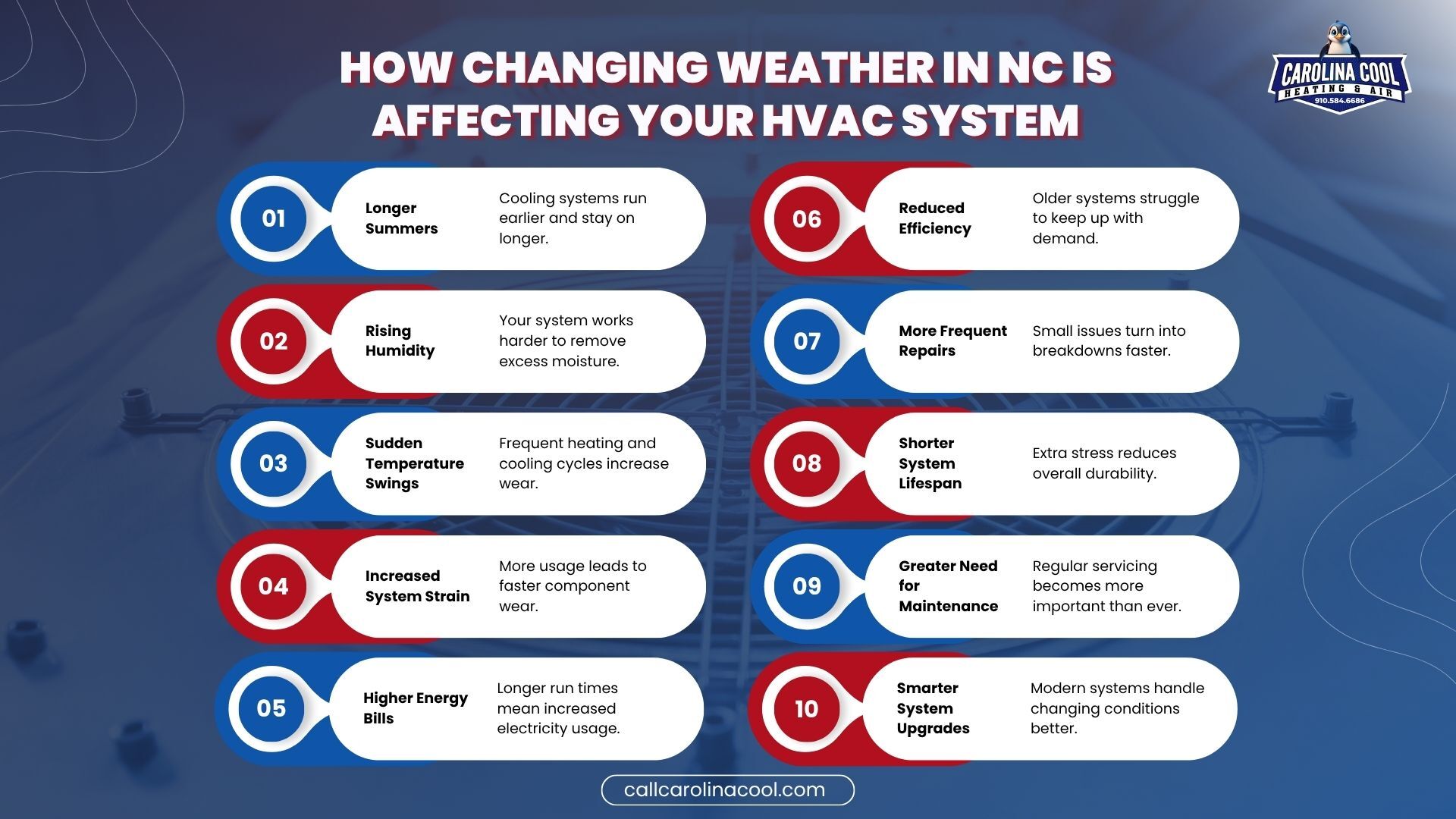
Let’s be honest. Summers in Fayetteville and much of North Carolina have always been warm. But now they’re stretching longer and feeling more intense.
Air conditioning systems are running:
- Earlier in the year
- Later in the fall
- For longer hours each day
This extended workload makes Air Conditioning Maintenance more important than ever. A system that used to run heavily for three months might now be pushed hard for five or six.
Over time, that kind of demand can lead to:
- Reduced cooling efficiency
- Higher energy bills
- More frequent breakdowns
In many homes, older systems simply weren’t designed for this kind of extended use. That’s why more homeowners are starting to consider AC replacement sooner than they expected.
Humidity Is Becoming a Bigger Problem
Heat is one thing. Humidity is another.
North Carolina’s humidity levels can make your home feel warmer than the actual temperature. Even when the thermostat says things are under control, the air can feel sticky and uncomfortable.
Your air conditioning system does more than cool the air. It also removes moisture. But when humidity levels stay high for longer stretches, your system has to work harder to keep up.
This often leads to:
- Longer cooling cycles
- Increased strain on components
- Indoor air that still feels damp
In some cases, homeowners think they need colder air when what they really need is better humidity control. That’s where system upgrades or adjustments, like Air Conditioning Thermostat Repair/Install, can make a noticeable difference.
Sudden Temperature Swings Put Extra Stress on Systems
One of the more frustrating changes is how quickly the weather can shift.
A cool morning can turn into a hot afternoon. A warm week can suddenly drop into chilly nights. These quick changes force your HVAC system to switch modes more often than it used to.
That constant switching can lead to:
- Faster wear on internal parts
- More frequent service calls
- Reduced the lifespan of the system
It also highlights the importance of having a thermostat that can handle these shifts smoothly. Modern thermostats are better at managing these transitions without overworking the system.
If your thermostat struggles to keep up, it may be time to look into Air Conditioning Thermostat Repair/Install options that give you better control and consistency.
Why Preventive Maintenance Matters More Than Ever
With all these changes in play, skipping routine maintenance is a gamble.
A system that’s already working harder due to weather trends doesn’t have much room for small issues. What used to be a minor problem can quickly turn into a major repair.
Regular Air Conditioning Maintenance helps by:
- Catching worn parts before they fail
- Keeping airflow steady and clean
- Improving energy efficiency
- Extending the life of your system
It’s not just about avoiding breakdowns. It’s about keeping your home comfortable without surprises.
And when summers stretch longer, that peace of mind becomes even more valuable.
When Repair Isn’t Enough Anymore
There comes a point where repairs start to feel like a cycle.
Fix one issue, then another pops up. Energy bills creep higher. Cooling doesn’t feel as strong as it used to. You might even notice uneven temperatures from room to room.
That’s often when homeowners start thinking about Air Conditioning Replacement.
Newer systems are built to handle today’s demands better. They’re more energy-efficient and better at managing humidity. They also tend to run quieter and more consistently.
If your system is:
- Over 10–15 years old
- Requiring frequent Air Conditioning Repair
- Struggling during peak heat
…it might be worth considering whether replacement makes more sense in the long run.
Sometimes Fayetteville Homes Face Unique Challenges
Every region has its quirks, and Fayetteville is no exception.
Homes here often deal with:
- High humidity levels
- Long cooling seasons
- Occasional cold snaps in winter
That mix puts year-round pressure on HVAC systems. It’s not just about cooling in summer or heating in winter. It’s about handling both, often within short time frames.
Older homes may also have:
- Outdated ductwork
- Less insulation
- Systems that weren’t designed for current weather patterns
All of these factors can affect how well your Air Conditioning system performs.
Energy Efficiency Is Becoming a Bigger Concern
With systems running longer and harder, energy use naturally goes up.
Homeowners are noticing:
- Higher monthly utility bills
- Systems running almost constantly during peak heat
- Difficulty keeping indoor temperatures stable
This is where efficiency starts to matter more than ever.
Modern systems are designed to use less energy while delivering better performance. Even something as simple as upgrading your thermostat or improving maintenance habits can make a noticeable difference.
And if you’re already considering Air Conditioning Replacement, energy savings can help offset the initial cost over time.
Smart Technology Is Changing How Systems Operate
Technology is quietly reshaping how people manage their HVAC systems.
Smart thermostats, for example, can:
- Adjust temperatures based on your schedule
- Respond to outdoor weather changes
- Help reduce unnecessary system use
In a place like North Carolina, where temperatures can shift quickly, that level of control can be a real advantage.
It’s not just about convenience. It’s about helping your system run more smoothly without constant manual adjustments.
Indoor Air Quality Is Getting More Attention
With longer cooling seasons and higher humidity, indoor air quality is becoming a bigger concern.
Your HVAC system plays a key role in:
- Filtering airborne particles
- Controlling moisture levels
- Circulating fresh air
When the system is overworked or not properly maintained, air quality can suffer.
That might show up as:
- Dust buildup
- Musty smells
- Allergy symptoms
Regular maintenance and occasional upgrades can help keep your indoor environment comfortable and healthy.
Preparing for the Heat Before It Hits
Here’s the thing about North Carolina summers. Once the heat arrives, it doesn’t wait around.
That’s why preparation matters.
Taking care of your system before peak season can help you avoid:
- Emergency breakdowns
- Long wait times for repairs
- Higher service costs during busy periods
Simple steps like scheduling maintenance or checking system performance early can go a long way.
How Homeowners Are Adapting to HVAC Needs
People across Fayetteville and the rest of North Carolina are starting to adjust their approach.
Instead of reacting to problems, many are:
- Scheduling regular system checkups
- Upgrading older units sooner
- Paying closer attention to energy use
- Investing in better temperature control systems
It’s a shift toward staying ahead of issues rather than dealing with them after the fact.
A Practical Way to Think About Your HVAC System
It helps to think of your HVAC system like a car.
If you drive more miles in tougher conditions, you need more frequent maintenance. You might even replace it sooner than expected.
The same idea applies here.
With changing weather patterns:
- Your system runs longer
- Works harder
- Faces more stress
So it makes sense that care and planning need to adjust, too.
Final Thoughts
Seasonal weather trends in North Carolina aren’t what they used to be. We’re all feeling it, even if it’s just in small ways at first. But those shifts do affect how our homes stay comfortable day to day.
With longer summers, higher humidity, and those sudden temperature swings, our HVAC systems are working harder than they used to. That’s why we pay more attention now to regular maintenance, timely repairs, and making smart upgrades when the time feels right.
Here in Fayetteville and across North Carolina, staying comfortable isn’t just about reacting when something breaks. We try to stay a step ahead by understanding how these weather changes impact our homes and what we can do about them.
And if we’re ever unsure about how our system is holding up, reaching out to a trusted local team like ours at Carolina Cool Heating & Air can make things a lot easier. A quick check or simple conversation can help us figure out what makes the most sense without overthinking it.