


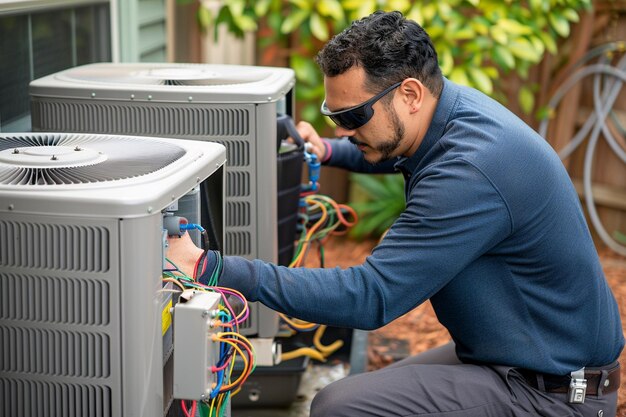
Air conditioners rarely fail at a convenient time. One day, the cooling feels a bit weak, the next day the system is blowing warm air, and suddenly you’re dealing with an urgent AC repair. That moment usually leads to the big question homeowners face: repair the unit or replace it completely.
When it comes to AC Repair vs AC Replacement: Which One Saves You More Money in 2026?, the answer is not the same for everyone. It depends on age, repair history, energy use, and how much comfort matters in your daily life. In places like North Carolina, especially Fayetteville, where summers can get heavy and sticky, this decision becomes even more important because your AC is not just comfort, it’s daily living.
This guide breaks everything down in a simple way so you can look at your situation clearly and avoid spending more than needed over time.
Why This Decision Matters in 2026
Cooling systems today are built differently compared to older units. Even a system from 10 to 12 years ago may feel outdated when compared with newer efficiency standards. Energy costs have also changed, and small inefficiencies can quietly add up on monthly bills.
In 2026, homeowners are not just thinking about fixing what is broken. They are also thinking about how much they spend every month to keep their home comfortable. That shift changes how repair and replacement decisions are made.
A quick fix might feel easier in the moment, but long-term costs tell a different story in many cases.
When AC Repair Makes More Sense
Repair is usually the first option people consider, and for good reason. If the system is still in decent shape, fixing a part can extend its life without a huge expense.
Here are situations where repair often makes sense:
1. The unit is still relatively young
If your system is under 8 years old, most issues are usually minor. Parts like capacitors, contactors, or thermostats can fail early but are not signs of total system failure.
2. The problem is isolated
If everything else works fine and only one part is acting up, repair is usually enough. A refrigerant leak, clogged drain line, or faulty sensor often falls into this category.
3. Maintenance has been consistent
Systems that receive regular servicing tend to last longer and face fewer breakdowns. In such cases, repair is usually the more practical choice.
4. Cooling performance is still strong
If the home still cools evenly and quickly after the repair, there is no urgent need to think about replacement.
Repair is not just about cost. It is also about timing. A well-timed repair can easily extend system life by a few years.
When AC Replacement Becomes the Smarter Choice
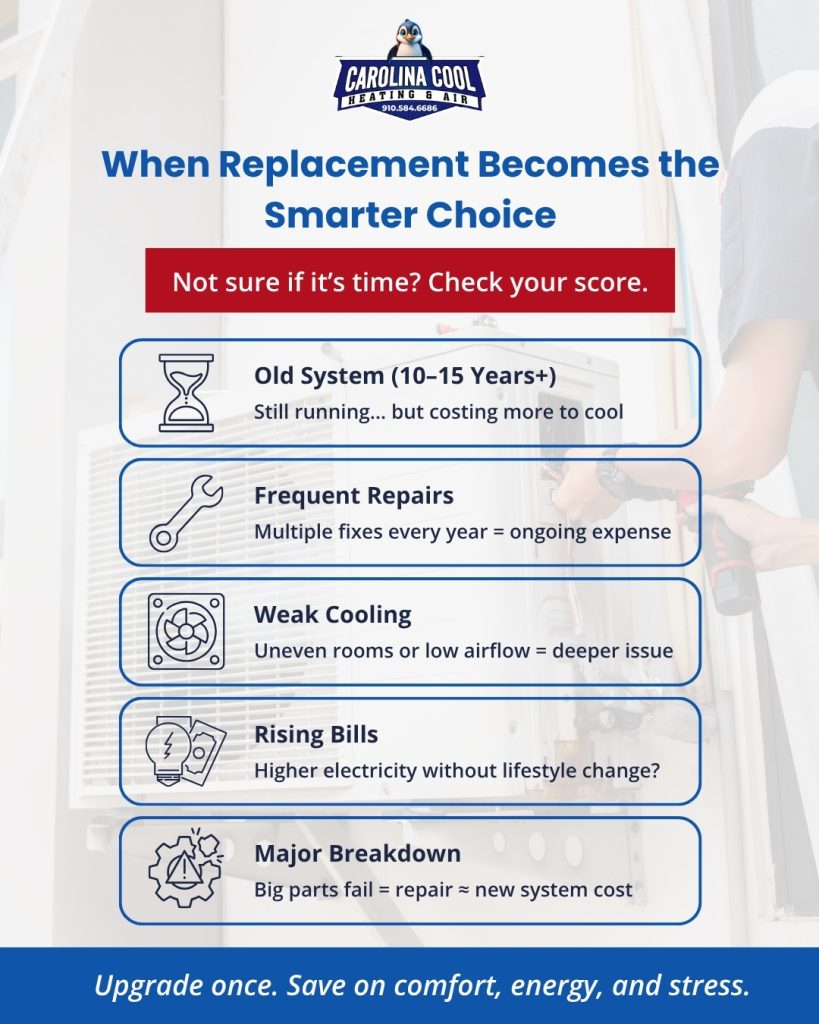
There comes a point where repairs start piling up, and comfort becomes inconsistent. That is usually when replacement starts to make more financial sense.
1. System age crosses 10 to 15 years
Older systems naturally lose efficiency. Even if they still run, they often use more electricity to produce the same cooling.
2. Frequent breakdowns
If you are calling for repairs multiple times a year, costs add up quickly. At some point, it stops being a “fix” and becomes ongoing spending.
3. Uneven cooling or weak airflow
Rooms that never cool properly, or air that feels weak even at full power, often signal deeper system wear.
4. Rising energy bills
If your electricity bill keeps increasing without major lifestyle changes, the AC could be working harder than it should.
5. Major component failure
When parts like the compressor fail, repair costs can get close to half the price of a new system. At that point, replacement usually makes more sense.
Replacement feels like a big step, but it also resets your system’s life cycle and often improves comfort instantly.
Cost Comparison in 2026
Cost is usually the deciding factor for most homeowners.
AC Repair Costs
Typical AC repairs can range widely depending on the issue:
- Small electrical fixes: lower cost range
- Refrigerant recharge or leak repair: moderate cost range
- Major part replacement: higher cost range
Even though repairs seem cheaper upfront, repeated service calls can slowly match the cost of a new unit.
AC Replacement Costs
Installing a new system involves a higher upfront investment. The price depends on:
- Home size
- System type
- Efficiency rating
- Installation complexity
While the initial number feels large, a new system often reduces monthly energy usage and avoids repeated repair spending.
The real comparison is not just today’s cost, but how much you spend over the next 5 to 10 years.
Energy bills and long-term savings
Older AC units often lose efficiency over time. That means they run longer cycles to cool the same space. Even a small drop in efficiency can lead to noticeable changes in monthly bills.
A new system usually brings:
- More stable cooling cycles
- Less strain on components
- Lower electricity use for the same comfort level
If your current unit is already showing higher energy use, replacement can slowly balance out its cost difference over time.
The Age of The System
Age is one of the simplest ways to judge where your AC stands.
- Under 8 years: repairs usually make sense
- 8 to 12 years: depends on condition and repair history
- 12+ years: replacement often becomes more practical
Age alone is not everything, but it gives a strong starting point when combined with performance and repair history.
Air Conditioner Repair Frequency
One repair is normal. Two in a year can still be fine. But when service calls become regular, it usually means the system is wearing down internally.
Repeated breakdowns often point to:
- Aging components
- Stress on internal parts
- System working harder than designed
At that stage, spending more on repairs rarely brings long-term relief.
Why Comfort Matters
Money is one side of the decision; comfort is the other.
If your home never feels evenly cooled, or humidity stays high even when the system runs all day, that affects daily living. In places like Fayetteville, where humidity can be intense, that discomfort becomes even more noticeable.
A system that struggles often forces you to adjust your home life around it. That is usually a hidden cost people do not calculate right away.
Fayetteville Climate And its Impact
North Carolina summers bring long periods of heat and humidity. In Fayetteville, AC systems often run for extended hours during peak months.
That kind of workload affects system life in a few ways:
- Faster wear on moving parts
- Higher moisture stress inside the unit
- More frequent filter and coil buildup
Because of this, systems in the region often reach replacement decisions slightly earlier compared to milder climates.
AC Repair or replacement decision checklist
Here is a simple way homeowners often think through it:
Start by asking:
- How old is the system?
- How many repairs in the last 2 years?
- Are energy bills rising?
- Is cooling even across all rooms?
- Is the repair cost getting close to a large fraction of a new system?
If most answers lean toward problems stacking up, AC replacement becomes easier to justify. If issues are minor and rare, repair still makes sense.
Financing and budget planning
A full system replacement can feel heavy on the wallet at first. Many homeowners choose financing options so the cost spreads over time.
This approach helps balance:
- Monthly budget
- Energy savings
- Long-term comfort
Instead of looking at replacement as a single expense, it becomes a planned monthly cost similar to utility bills.
Getting a proper system evaluation
A real decision should never be rushed. A proper inspection from a technician helps reveal things like:
- Internal wear that is not visible
- Efficiency loss over time
- Hidden refrigerant issues
- Airflow restrictions
Sometimes what looks like a big failure is actually a small repair. Other times, a “small issue” is part of a larger system decline.
Why Choose Local Service
Working with a local HVAC team in North Carolina matters because climate patterns, humidity levels, and seasonal load are familiar territory for them. That experience helps in giving clearer recommendations based on real usage conditions rather than generic advice, along with proper air conditioner maintenance that keeps systems running smoother for longer.
When systems start aging or breaking down frequently, having someone who understands local conditions can make decision-making easier and more accurate.
Carolina Cool Heating & Air often works with homeowners in Fayetteville who face this exact decision, and the focus is always on what makes sense for long-term comfort and cost, not just short-term fixes.
Final thoughts
Choosing between repair and replacement is not just about fixing what is broken. It is about understanding how your system performs today and what it will cost you tomorrow.
A younger system with small issues usually just needs repair. A system that is older, less efficient, and requiring repeated attention often ends up costing more over time if kept alive with frequent fixes.
The right decision depends on balance. Cost today, cost next year, and how much comfort matters in your home life.
At the end of the day, the goal is simple: steady cooling, stable bills, and fewer surprises during peak summer heat. When homeowners in Fayetteville face this choice, we at Carolina Cool Heating & Air focus on helping them choose what fits their home best, not just what fixes the moment.